
Pending HOPs shortage may demand alternative brewing methods
 Disclaimer: It is rare that I get an email asking me to publish a press release or pre-written article, the last one being the SOBA award winners from a year ago.
So when I received an unsolicited email I was intrigued, and having read the text I saw no real reason not to publish
Alternative methods to brewing with HOPS
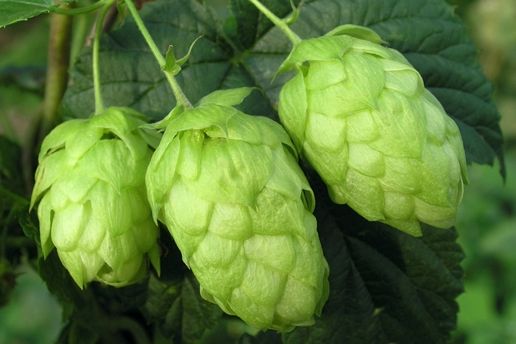
Beer is a globally demanded beverage. In the United states last year nearly 6.3 billion gallons([1]) of beer were consumed. In the UK over 15 billion pints (or 2.4 billion gallons) are consumed annually([2]). With a world population of only 7.4 billion people including minors, beer consumption is clearly at an all-time high. This increase has caused concerns for hops growers, specifically those in the Yakima Valley where nearly 80% of the country’s hops are produced. The concern is valid. The more the demand is upon the beer industry, the less likely the fields which grow the hops will be able to keep up with the demand. As such, breweries should consider alternate methods of brewing. Here are a few proven alternatives which produce a great brew.
Fruit as a brewing alternative
Fruit, particularly lemon, berry, and grapefruit has proven to be a welcome alternative to hops. The benefit of the fruit is that combinations can be explored and new flavors developed. Where the “traditional” flavor is not strongly present in the fruit brewing process, the new flavors have grown in popularity amongst the younger target market. Fruit brewing stated in the US and has branched out to be a global solution to the possible shortage of hops.
Breweries that choose to use the fruit method should experiment with different flavors to get the best flavor. It is important to note that some “traditionalist” are a bit opposed to the fruit brewing methodology as the flavor tends to be sweeter than what can be accomplished by hops brewing. In such cases where a bitter flavor is desirable, consider using the rind of the fruit in the brewing. Caution should be used with fruit, especially when dealing with the fermentation process.
It may sound a bit strange but the potato (both the regular and the sweet potato) can be used as an alternative to brewing with hops. The flavor that is produced is a bit on the sweeter side if using the sweet potato. If using a standard Idaho potato or the equivalent, the flavor is very earthy. This is a benefit for the brewer who has customers wanting that traditional earth taste to their beer. Granted, it is not hops and so there will be a taste difference. However, as a substitution that has the possibilities of utilizing other flavors and ingredients that you would use in your specialty brews, potatoes are a very effective and interesting alternative.
Pumpkin and Pumpkin seeds
Traditionally a method used in the fall brews, the pumpkin and the pumpkin seed can be used as an alternative to give a bit of spice to the brew, especially for your specialty brands and selected brews. Pumpkin has a very definitive flavor unlike some of the other alternatives available. It is not advised that this become your primary mode of brewing as the supply is seasonal and the flavor is only demanded in the fall to winter months.
Nuts
Acorn, Chesnutt, Walnut, and other nuts have for years been used in the brewing process. The ground up nuts can be used instead of hops to create a similar texture to the brew. It is important to note that the nut alternative does add a great deal of protein and fat to the beverage and so those which are trying to get a lighter beer may want to choose a different alternative. However, the advantage of the nuts in brewing is that you can dry brew. Additionally, nuts can be swapped for various varieties and flavors throughout the year. Unlike some fruits and vegetable alternatives, most nuts are available year round and can be manipulated to give variations of flavor.
To minimize the fat content consider mixing the nuts with rice or fruit. You can also use an extract to give your brew a specific flavor.
Use your imagination
Where there may be an impending shortage of hops, it is quite unlikely that beer will cease to exist in the near future or that people will cease to make their brews. When it comes to the brewing and the consuming of beer, use your imagination or do a simple search on the internet for alternative recipes. There are a ton out there. And where I would not go so far as to suggest carrots or squash in your brew (which some sites promote as an alternative) there are other ingredients that can and should be tested, such as the coca bean, coffee beans, and rice.
The main goal is not to find an alternative for your hops but to find a recipe that will carry your brand and your signature/standard of beer should there be a shortage. Define your flavors by testing the different alternatives and using the solution best for your brew.
Thank you for reading.
Written by The Carling Partnership. The Carling Partnership, formed in 2001, is a UK based search and selection company in the beer industry. Join them on Linkedin for more information.
[1] http://www.cnsnews.com/blog/gregory-gwyn-williams-jr/americans-consume-63-billion-gallons-beer-annually
[2] http://www.kgbanswers.co.uk/how-many-pints-of-beer-are-consumed-each-year-in-the-uk/3445249




 A life just as ordinary