The Ace of Lace
Ace of Lace
If you’ve spent any time sitting at a high table in a good local taproom over the last few years, staring down at an empty Nonic pint glass, or more often the glassware of choice in any establishment in any serve size, you’ve probably noticed those intricate, spiderweb rings left behind on the glass.
We talk about “Brussels lace” like it’s some modern craft beer invention—a shiny new metric we all suddenly decided to care about alongside Untappd scores, haze levels, and fruit-forward hop profiles.
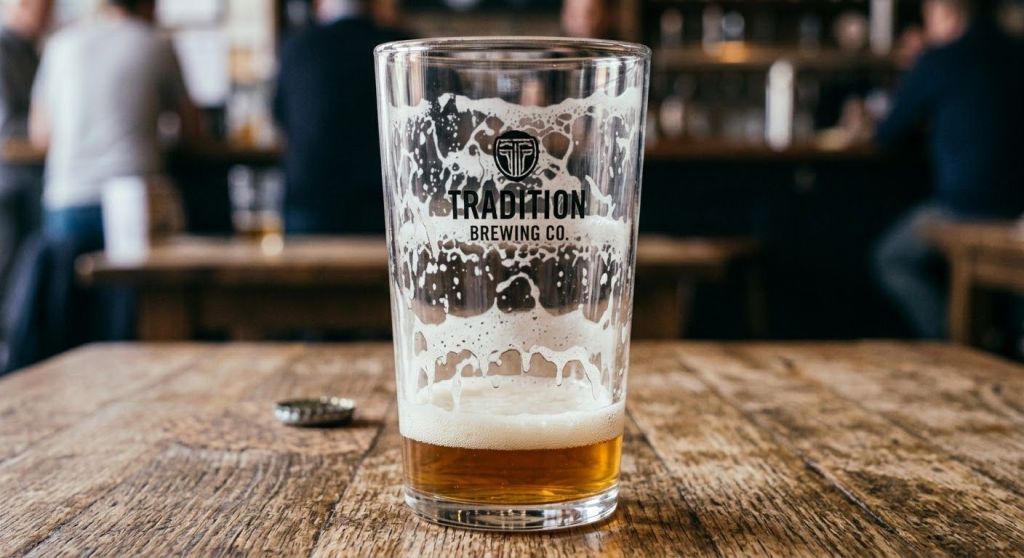
In tasting sessions, judging panels, and casual Sunday sessions alike, people point to those sticky white rings as the ultimate proof of a brewery’s skill and a bar’s standards.
But lacing isn’t new. What’s new is that for decades in New Zealand, our beer simply wasn’t built to leave it behind.
The Illusion of a ‘New’ Metric
To understand why lacing feels like, to me, a recent or increasingly visible phenomenon, you have to look at what was pouring from our taps since ages. The draught beer that dominated Kiwi pub culture through the late 20th century was engineered for pure drinkability, consistency, and high-volume cold consumption. These were clean, refreshing brews, but they were brewed with a light touch on hops and a heavy reliance on adjuncts like corn or cane sugar.
The Technical bit: Lacing requires a violent chemical marriage between two things: iso-alpha-acids (the bittering compounds extracted from hops during the hot-side boil) and LTP1 proteins (lipid transfer proteins derived from barley malt).
The Layman Bit: When you tilt a glass to take a sip, carbonation bubbles carry these proteins to the surface. The bitter iso-alpha-acids cross-link with those proteins to form an elastic, sticky skin around each individual bubble. As you tilt the glass back and the liquid recedes with every sip, that protein-hop skin clings for dear life to the interior glass wall.
If you’re drinking a low-bitterness draught brewed with reduced hop loads and pale adjuncts, there simply isn’t enough chemical “glue” to stick to the glass. You get a clean, rinsed wall and zero lace.
Then came the Kiwi craft revolution—and crucially, the rise of home-grown hops like Nelson Sauvin, Motueka, and Riwaka.
When local brewers started dumping massive hop bills into modern Pale Ales and IPAs, they weren’t just loading the beer with gooseberry, passionfruit, and diesel aromatics; they were pouring in colossal amounts of alpha acids and polyphenols. Add to that the shift in grain bills—brewers throwing raw wheat, rolled oats, and specialized Munich malts into the mash to build mouthfeel—and suddenly you have a protein-and-hop bomb sitting in your glass.
The foam isn’t just a fleeting fizz anymore; it’s a structural meringue.
The Sabotage of the Hazy IPA
And then, of course, there’s the modern Hazy IPA.
It feels a bit counterintuitive when you’re staring at a pint that looks like a glass of tropical juice capped with a pillowy, thick head, but hazies are notorious foam-killers when it comes to actual lacing.
Because brewers shift the hop additions away from the hot-side boil to minimize perceived bitterness and dump massive amounts into cold-side dry hopping during or after fermentation, you end up with low bittering acids and sky-high essential hop oils (like myrcene and humulene). Those oils act as natural lipid destroyers, breaking down the surface tension of the bubble walls.
Add in the higher fat content from flaked oats in the mash bill, and that gorgeous, thick foam cap usually just slides straight down the glass without grabbing hold. A hazy might look incredible on the pour, but it rarely leaves that classic, stepped ladder pattern behind as you finish the glass.
Why It’s Popular & Noticeable Now
Part of why lacing feels like an obsession today comes down to a simple reality: we look at our beer differently now. Thirty years ago, in a dimly lit local pub, you drank cold draught out of a sturdy, straight-sided Nonic pint glass. The Nonic was designed for stackability and toughened rims to stop chipping in commercial dishwashers—not for displaying foam architecture.
Today, step into any decent taproom and your West Coast IPA or Pilsner arrives in a stemmed Teku, a curved Tulip, or a specialized IPA glass. These modern shapes aren’t just for show. Their inward-tapering rims funnel aromatics while pushing the foam head tight against the glass. Many even feature nucleated laser-etching at the base—tiny grooves that trigger a constant, steady stream of micro-bubbles rising to the surface.
Every time you tilt a tulip or Teku glass, the curved walls catch that protein-and-hop skin across a wider surface area. Combined with modern bar-top glass rinsers blasting away micro-dust before the pour, you get a pristine canvas. Lacing isn’t just happening more often; we’ve given ourselves the exact glassware required to actually notice it.
So, Is Lacing Tied to One Style?
Not really, no.
At the end of the day, lacing isn’t a badge owned by any single style—it’s just chemistry doing its thing. It doesn’t care what label is stuck on the tap handle; it only cares whether you’ve got the right balance of isomerised hop bitterness, decent barley proteins, and a glass that isn’t coated in grease or rinse-aid.
That said, certain styles definitely stack the deck in their favour:
- West Coast IPAs & Bitter Pale Ales: The undisputed champions of sticky rings. They feature high kettle-bitterness to supply the chemical glue, minus the heavy cold-side oils that break surface tension.
- Czech Pilsners & German Helles: Outstanding lacing potential despite lower bitterness, purely off the back of top-tier continental malts loaded with foam-positive proteins and clean lager fermentations.
- Stouts & Porters: Roasted malts introduce unique foam-stabilising compounds and proteins, often leaving a thick, tan velvet trail down the glass.
- Sour Ales & Wild Ferments: Very low lacing. The high acidity (low pH) and bacterial activity strip the foam proteins apart before they ever reach the glass wall.
The Unsung Villain: Glassware Hygiene
There’s also the unsung villain of the entire story: the pub glass washer.
You can brew the most protein-rich, heavily hopped IPA in the country, but if the bar’s dishwasher is leaking commercial rinse-aid, or if the glass was wiped down with a greasy bar rag, the lacing dies instantly. Oils, milk fats from coffee cups washed in the same machine, and detergent films act as instant foam-destroyers. They destroy surface tension faster than you can say “shout.”
This is why the modern craft movement brought an almost religious obsession with the “Beer Clean” glass. Specialized, non-oil detergents, cold-water glass rinsers built into the drip tray, and air-drying racks mean the glass waiting for your pour today is actually clean enough to let that protein skin stick.
So no, lacing isn’t an “IPA thing” or a “Lager thing,” nor is it a modern invention. It’s just what happens when the hops, the malt, and a properly clean glass all happen to align.